

Plaça de Cuba, 47
At the end of the 19th century, Mataró’s rapid demographic and industrial growth rendered the historic market of Plaça Gran insufficient to meet the needs of the expanding population.
To satisfy the city’s increasing demand for food supplies, Plaça de Cuba initially hosted an open-air market. Over time, pressure from traders, who wished to avoid working exposed to adverse weather conditions, led the City Council to establish it as a permanent marketplace with wooden stalls. However, these structures, built on sandy ground, were particularly vulnerable during periods of rain. As a result, and in response to requests from both vendors and customers, the City Council decided to construct the large market building that stands today.
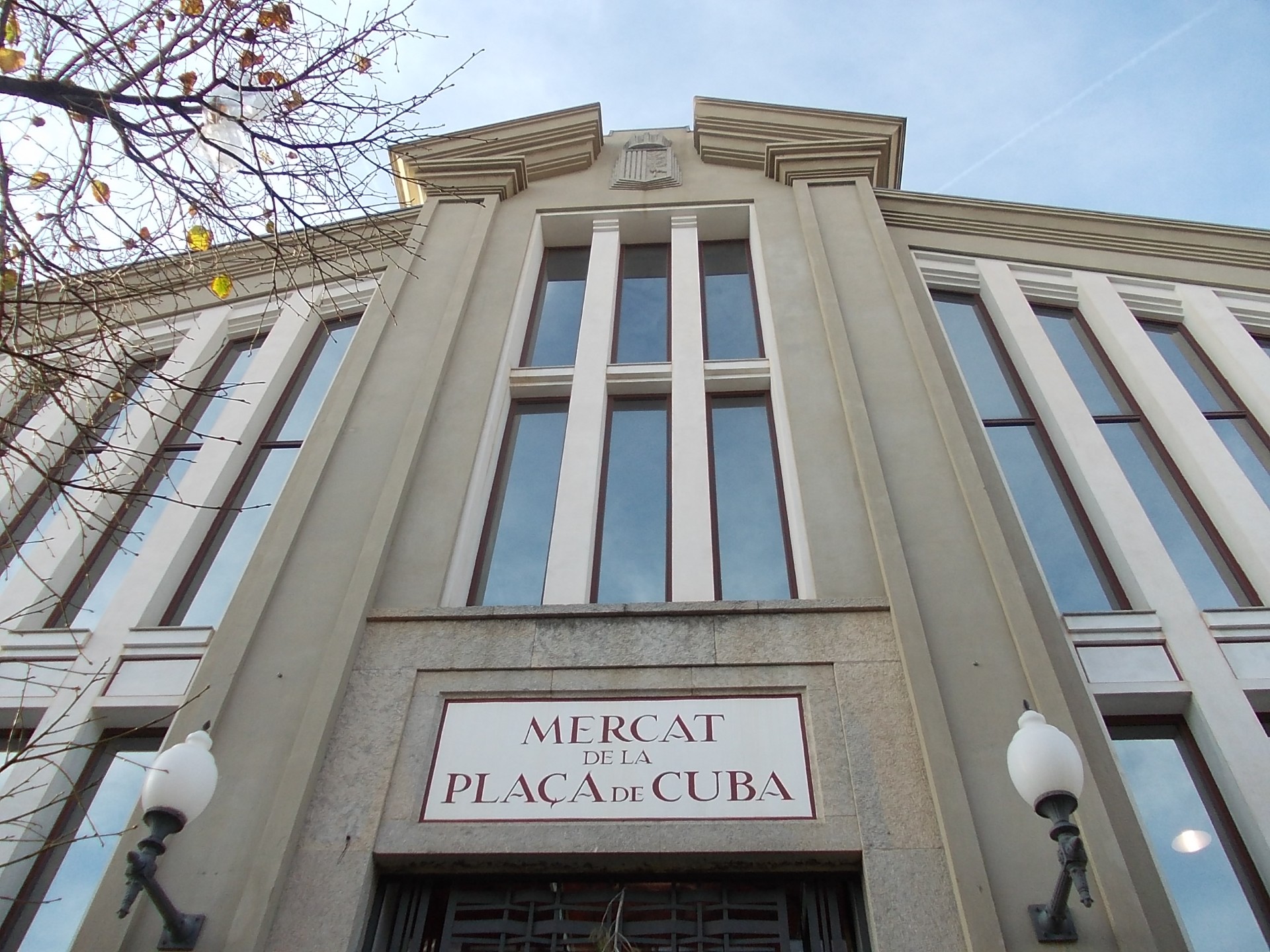
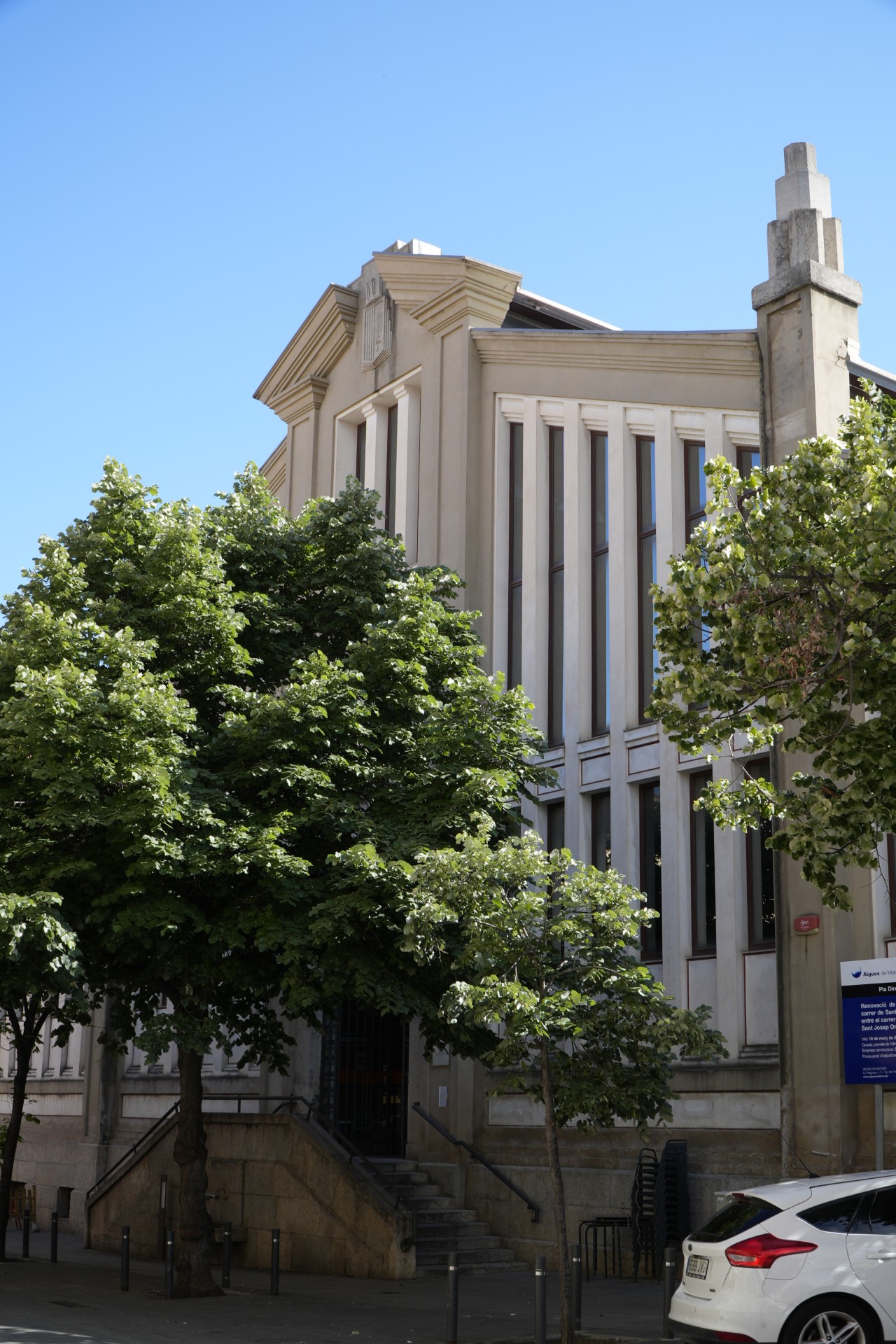
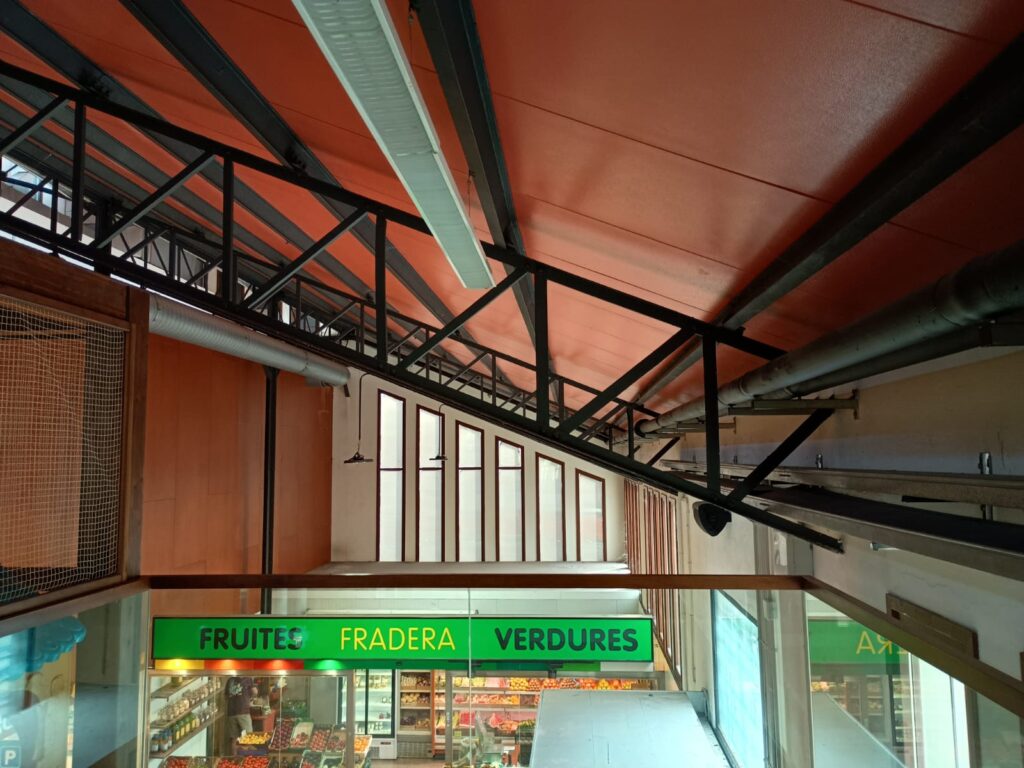
The imposing Rationalist-style building was inaugurated on 12 April 1936 and was designed by the architect Lluís Gallifa Grezner.
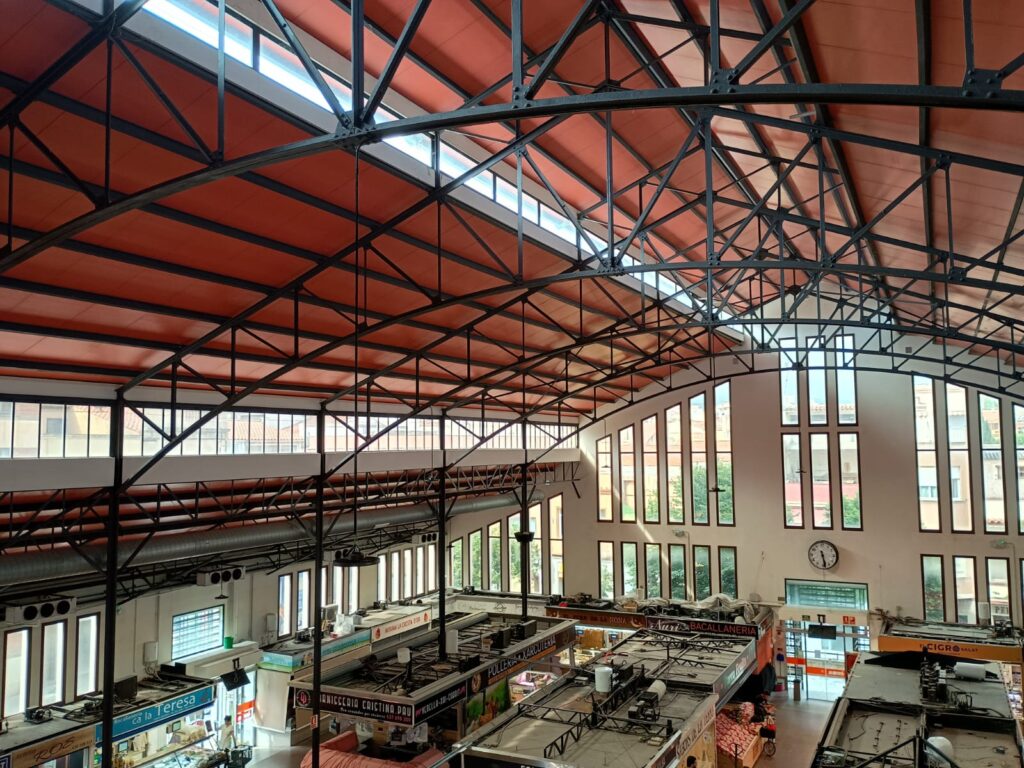
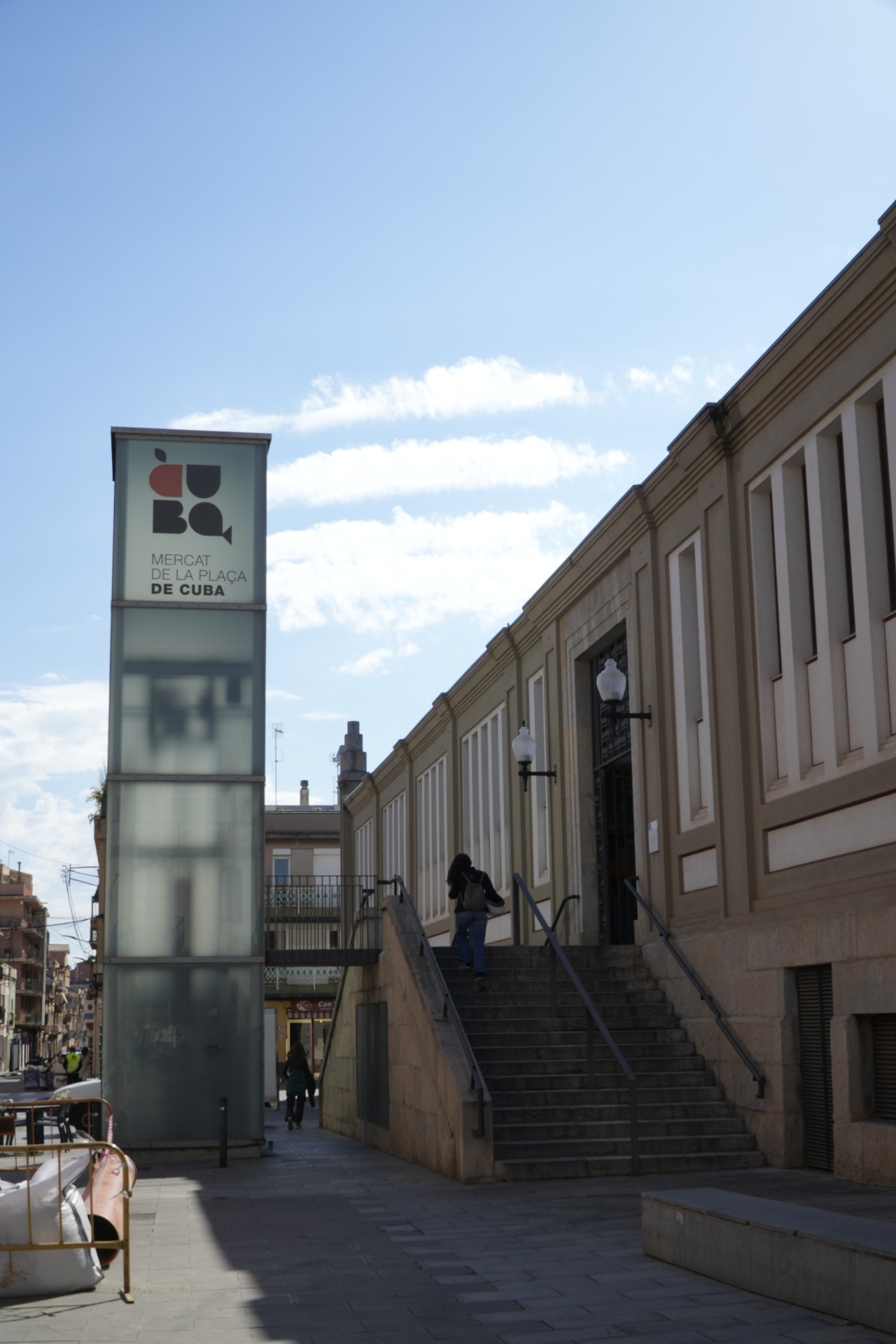
Located at the centre of the square, it is distinguished by its single-span structure, clean straight lines, and large vertically arranged windows set in a symmetrical composition. Unlike traditional iron markets, it was built using masonry and rendered finishes, following the architectural language of the large industrial factories of the period. Indeed, its exterior closely resembled that of the former factory of the Cristalera Cooperative Society of Mataró.
As a historical curiosity, during the Franco dictatorship the building was renamed the Market of the Immaculate Conception.
After decades of uninterrupted activity, the market underwent a comprehensive renovation in 2010 to modernise its facilities. Today, in addition to the daily commercial activity that takes place within the building, the surrounding square comes alive on certain days of the week thanks to the traditional street market, preserving the vibrant trading spirit upon which the market was originally founded.